
Disappointed over Pakistan's slow pace of trial in Mumbai terror attack case, a top American lawmaker has demanded that the seven suspects, including Lashkar-e-tayiba operational commander Zakiur Rehman Lakhvi, be handed over to the International Criminal Court to bring them to justice.
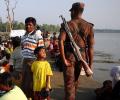
Resettlement of refugees elsewhere is not the morally correct solution to the problem for it lets the perpetrators off the hook.

South Koreans learn how to talk to the enemy
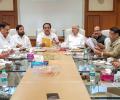
By ending the Shiv Sena's political untouchability, the Congress is creating a level playing ground for itself in the political battle of Hindu identity, explains Sheela Bhatt.
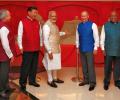
'The crux of the matter is that our narrative lacks credibility with world capitals,' argues Ambassador M K Bhadrakumar.

Religion is but one trait where intolerance manifests itself. We come across 'chosen' races, communities, political ideologies, economic systems, all lending themselves to discriminatory arrangements, which trample the rights of those considered beyond the pale of whatever is the favoured calling.
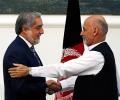
As Ashraf Ghani and Abdullah Abdullah form a joint government after contesting the presidential election against each other, Prakash Bhandari reports from Kabul on the problems facing the new, US-brokered arrangement.

Mufti's political graph shows his fondness for courting unpopular, politically hazardous ventures in pursuit of his ultimate objective to vindicate his leadership. Towards the end of his life, Mufti's public profile had come to assume the dimensions of statesmanship. One reason being his willingness to learn from his experience, says Mohammad Sayeed Malik.
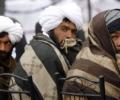
We should be prepared for a phase of increased tensions in India-Pakistan relationship thanks to the evolving situation in Afghanistan, says Shyam Saran.

'For years, a whispering campaign against the non-Nagas -- and occasional violence -- has dominated the local discourse, but Farid Khan's lynching was unprecedented in its ferocity.'

Opposition parties ask the government to listen to the concern of the intellectuals returning awards.
.jpg)
Modi government must push reforms at a fast pace to restore growth.

Madras Cafe is a swift, smart and serious study of an inglorious chapter of history, writes Sukanya Verma.

The clichd path of conducting 'uninterrupted and uninterruptable' bilateral dialogue with Pakistan to improve ties remains unimplemented and un-implementable under prevailing circumstances that are unlikely to alter in the near future, says Rahul Bedi.
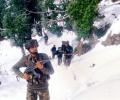
The army of the future needs a system of transparency and research. An open sociology of the army is a democratic necessity. An openness of information is a necessity of the army of the future fighting the next peace and next war on behalf of society, says social scientist Shiv Visvanathan.

The ninth edition of the Global Peace Index, which ranks the nations of the world according to their level of peacefulness, has ranked Syria as the most dangerous country in the world.

India comes under attack over religious intolerance, human trafficking and slavery at a Senate Foreign Relations Committee hearing.

'Godse is no more, but the mindset which gave birth to such distorted philosophy is unfortunately still with us.'

There is speculation that China released the White Paper on Tibet in a hurry after a Spanish court agreed to hear charges of genocide against former Chinese president Hu Jintao. Ajai Shukla reports


'China's latest defence White Paper has been issued against the backdrop of the upgraded Sino-Pakistan strategic relationship which has impinged on India's sovereignty and territorial integrity, and Beijing's continuing intransigence on tackling the issue of the disputed border or intrusion by PLA troops,' says Jayadeva Ranade.

'For a long time Pakistan dreamt that India would break up and that it would be the predominant power in the region,' says Colonel Anil A Athale (retd).
